The way people search for information is undergoing a fundamental transformation. Artificial intelligence is no longer a futuristic concept; it is actively reshaping how users discover brands, products, and services. In China, this shift is happening at an unprecedented pace. Baidu's integration of ERNIE, its large language model, into search results means that traditional SEO tactics alone are no longer sufficient. Enter Generative Engine Optimization (GEO), the strategic discipline of ensuring your content is not just indexed by search engines, but understood, synthesized, and recommended by AI systems.
For international companies looking to establish a foothold in China, mastering GEO is no longer optional. It is the difference between being invisible and being the answer that AI delivers to millions of Chinese consumers.
How AI Search Is Changing in China
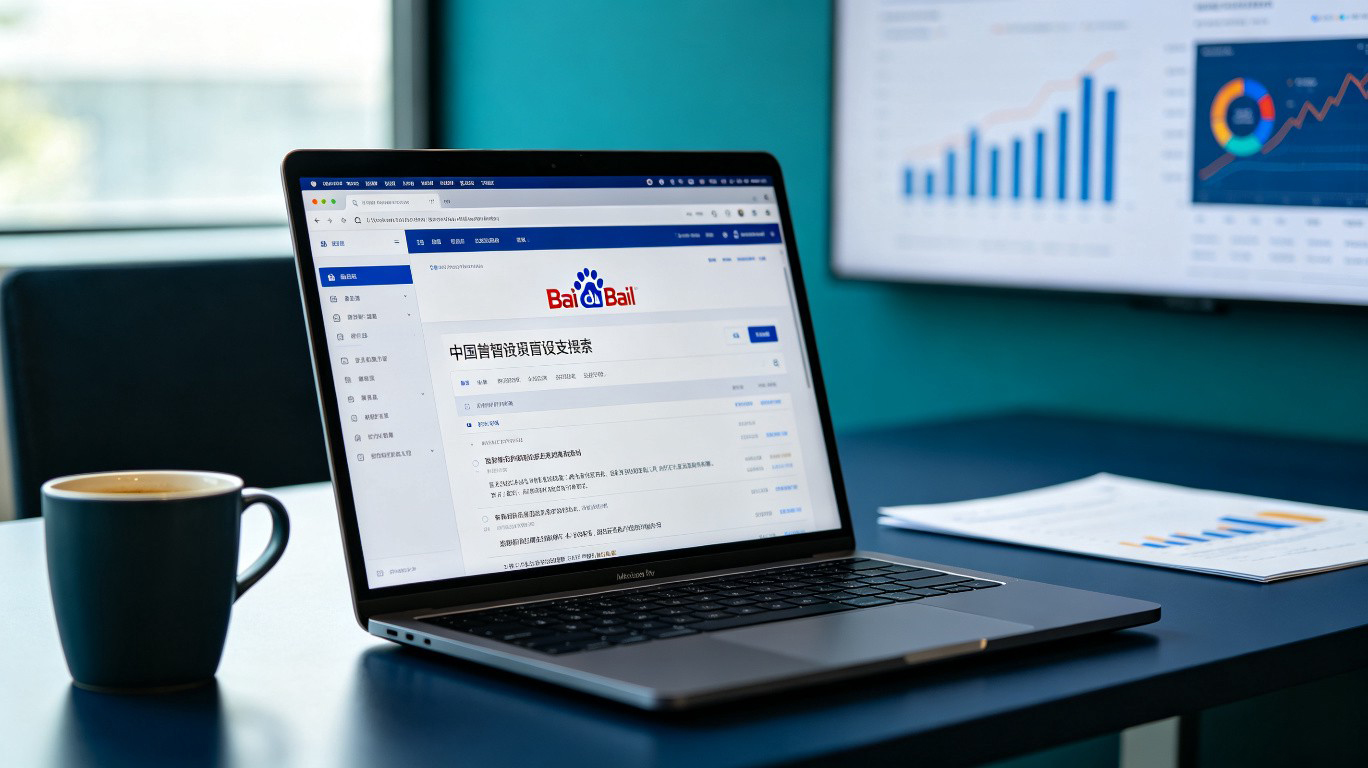
China's search landscape has always been distinct from the rest of the world. While Google dominates globally, Baidu commands over 70% of the search market in China. But the real disruption is not just about market share; it is about how search results are generated.
Baidu has aggressively integrated its ERNIE Bot into the search experience, providing users with AI-generated summaries directly on the search engine results page. Instead of simply displaying a list of blue links, Baidu now synthesizes information from multiple sources to deliver concise, conversational answers. Other platforms, including Alibaba's Tongyi Qianwen and ByteDance's Doubao, are also embedding AI search capabilities into their ecosystems.
This shift means that ranking on page one is no longer the ultimate goal. The new objective is to become the source that AI engines cite, reference, and summarize. If your content is not structured in a way that AI can easily parse and trust, you risk being completely bypassed, even if you hold a top organic position.
Key Differences Between GEO and Traditional SEO
While SEO and GEO share common foundations, they diverge in critical ways. Traditional SEO focuses on keywords, backlinks, and technical crawlability to rank pages in a list. GEO, on the other hand, optimizes for comprehension, credibility, and citation by generative models.
- Intent over keywords: GEO prioritizes natural language understanding and semantic context rather than exact-match keyword density.
- Answer optimization: Instead of optimizing for clicks, GEO optimizes for being the answer that appears in AI-generated summaries.
- Structured clarity: AI models favor content with clear hierarchies, defined entities, and explicit relationships between concepts.
- Multi-source credibility: GEO requires building authority across multiple trusted sources, as AI engines cross-reference information.
- Conversational formatting: Content must be ready to be reformulated into dialogue-style responses.
In China, these differences are amplified by the linguistic complexity of the Chinese language, the unique behavior of Chinese search users, and the regulatory environment that shapes how AI models are trained and deployed.
Structured Data and Schema Markup for AI Visibility
Structured data has always been valuable for SEO, but in the era of GEO, it is essential. Schema markup helps AI engines understand not just what your content says, but what it means. By explicitly defining entities, attributes, and relationships, you make it significantly easier for generative models to extract and cite your information accurately.
For the Chinese market, implement schema types that are most relevant to your industry: Organization, Product, FAQPage, HowTo, Article, and LocalBusiness. Baidu's Spider and AI systems increasingly rely on structured data to build knowledge panels and generate rich results. Ensure your schema is implemented in JSON-LD and validated through Baidu's webmaster tools.
Pay special attention to FAQ schema. When Baidu's ERNIE generates answers to user questions, FAQ pages with proper markup are among the most frequently sourced content types. A well-structured FAQ that addresses common questions in natural, conversational Chinese can become a primary source for AI-generated responses.
Content Optimization for Conversational Queries
Chinese users are increasingly interacting with search engines through voice and conversational interfaces. The queries are longer, more contextual, and often phrased as complete questions rather than fragmented keywords. Optimizing for this behavior requires a fundamental rethink of content structure.
Start by researching the questions your target audience actually asks. Use Baidu's autocomplete suggestions, Zhihu discussions, and Xiaohongshu search trends to identify real conversational queries. Then, create content that answers these questions directly and comprehensively within the first few paragraphs.
Use a question-and-answer format throughout your content. Clear H2 and H3 headings phrased as questions signal to AI systems that your content contains direct answers. Follow each heading with a concise, authoritative response before expanding into deeper detail. This layered approach satisfies both AI summarization algorithms and human readers seeking quick answers.
Entity Optimization and Knowledge Graphs
Generative engines do not think in keywords; they think in entities. An entity is a distinct concept, person, place, or thing that AI models recognize and connect to other entities within a knowledge graph. In China, Baidu's knowledge graph is a critical component of how ERNIE understands and generates responses.
To optimize for entities, ensure your content explicitly defines who you are, what you do, and how you relate to recognized concepts in your industry. Mention your brand name consistently alongside relevant industry terms. Create dedicated pages for key people, products, and services, and interlink them logically.
Claim and optimize your Baidu Baike entry, as it serves as a trusted entity reference for Baidu's AI. Similarly, maintain accurate and consistent information across Zhihu, Toutiao, and other platforms where Baidu sources knowledge. The more consistently your entity appears across trusted sources, the more likely AI engines are to cite you as authoritative.
Multi-Modal Content Strategies
AI search in China is inherently multi-modal. Baidu's search results increasingly incorporate images, videos, and interactive elements alongside text. Platforms like Xiaohongshu and Douyin have trained Chinese consumers to expect rich, visual-first content experiences.
To succeed in GEO, your content strategy must extend beyond text. Create short-form videos that explain key concepts related to your industry. Optimize video titles, descriptions, and transcripts in Mandarin. Use high-quality images with descriptive alt text and structured captions. Consider developing infographics that summarize complex information in visually digestible formats.
Importantly, ensure that visual content is hosted on Chinese platforms. Baidu favors content served from its own ecosystem, including Baidu Video and Baijiahao. Uploading videos to these platforms, rather than relying solely on YouTube or Western hosting, significantly increases the likelihood of inclusion in AI-generated results.
Voice Search Optimization in Chinese
Voice search adoption in China is among the highest in the world, driven by the popularity of smart speakers, in-car assistants, and mobile voice input. Chinese voice queries tend to be longer, more casual, and heavily influenced by regional dialects and speaking habits.
Optimizing for voice search requires a focus on natural, spoken Mandarin. Write content that sounds natural when read aloud. Avoid overly formal or written-only expressions that feel awkward in speech. Include long-tail question phrases that mirror how people actually talk, such as "What is the best way for a foreign company to register a trademark in China?"
Local voice search is particularly important for businesses with physical presences or local services. Ensure your Chinese business name, address, and phone number are consistent across all directories and platforms. Register with Baidu Maps and Amap, as these are primary data sources for location-based voice responses.
Measuring GEO Success
Traditional SEO metrics like rankings and organic traffic still matter, but GEO requires additional measurement frameworks. Track how often your brand is mentioned in AI-generated summaries by manually monitoring Baidu search results for target queries. While automated tools for GEO monitoring are still evolving, regular manual audits provide valuable insights.
Monitor your citation rate across AI platforms. Are you being referenced in Zhihu AI summaries, Baidu's ERNIE responses, or Toutiao's smart recommendations? Track branded search volume as a proxy for AI-driven awareness. When AI engines consistently cite your brand, users begin searching for you directly.
Engagement metrics also shift in importance. Dwell time, content sharing rates, and return visits signal to AI systems that your content is valuable and trustworthy. Invest in analytics that can track user behavior across Chinese platforms, including Baidu Tongji, WeChat analytics, and third-party tools designed for the Chinese digital ecosystem.
Future Trends and Recommendations
The GEO landscape in China will continue to evolve rapidly. We expect Baidu to deepen ERNIE's integration across its entire product suite, from search to maps to cloud services. AI agents capable of completing multi-step tasks on behalf of users will become mainstream, meaning your content must be actionable and transactional, not just informational.
Regulatory developments will also shape GEO strategies. China's AI governance framework emphasizes accuracy, transparency, and source credibility. Brands that invest in authoritative, well-sourced content will have a significant advantage as regulators and platforms alike prioritize trustworthy information.
Our recommendations for international brands are clear. First, treat GEO as a strategic priority, not an afterthought to traditional SEO. Second, invest in native Chinese content creation; translation is insufficient for AI optimization. Third, build presence across the Chinese digital ecosystem, not just on your own website. Fourth, stay agile; the platforms, algorithms, and best practices will continue to change.
"The brands that win in China's AI-powered search era will not be those with the most keywords, but those with the clearest answers, the strongest entities, and the most trusted presence across the Chinese digital ecosystem."
Ready to Optimize for China's AI Search Revolution?
EastZebra helps international brands build GEO strategies that put you at the top of AI-generated results. From structured data implementation to multi-modal content creation, we ensure your brand is the answer Chinese consumers find.
Book a GEO ConsultationConclusion
Generative Engine Optimization represents the next frontier of digital visibility in China. As AI-powered search becomes the default experience for hundreds of millions of Chinese users, the rules of discoverability are being rewritten. Success requires moving beyond traditional SEO mindsets and embracing a holistic approach that prioritizes clarity, credibility, and multi-modal presence.
For international companies, the opportunity is immense. Those who invest in GEO now will establish themselves as trusted sources in the eyes of China's AI engines, creating a sustainable competitive advantage that grows stronger as AI becomes more deeply embedded in everyday search behavior. The question is not whether GEO will become essential; it already is. The question is whether your brand will be ready.
At EastZebra, we specialize in helping global companies navigate China's complex digital landscape. Our GEO optimization services combine deep technical expertise with native market knowledge to ensure your brand stands out in the age of AI search. Contact us today to start building your generative engine strategy for China.