China's social media landscape is the most video-centric digital ecosystem in the world. Douyin (the Chinese version of TikTok) alone generates over 1.5 billion daily video views. Xiaohongshu's video content has grown by over 200% year-over-year as the platform evolves from a photo-first discovery engine to a multimedia commerce platform. WeChat Video Accounts have become the default channel for brands seeking long-form educational and brand storytelling content. And Bilibili — China's answer to YouTube — demands production quality that rivals professional television.
For international brands, the challenge is not whether to produce video content for China. The question is how to produce it in a way that actually performs. A 60-second brand video optimized for YouTube's horizontal format and measured pacing will fail on Douyin, where users scroll vertically at high speed and expect a hook within the first 0.5 seconds. A beautifully shot Instagram Reel will underperform on Xiaohongshu if it lacks the aesthetic polish and editorial sensibility that platform's users expect. A 10-minute tutorial that works on YouTube will lose WeChat viewers if it is not structured for the platform's unique consumption patterns.
This article provides a comprehensive framework for international brands to plan, produce, and optimize video content for Chinese social platforms — including how to work with China-based editing teams to achieve the quality and turnaround speed that these platforms demand.
Why Video Content Must Be Adapted for Chinese Platforms
The assumption that a single video asset can be repurposed across platforms without modification is one of the most common — and most expensive — mistakes international brands make when entering China. Chinese social platforms have fundamentally different content formats, user behaviors, and algorithmic preferences than their Western counterparts.
The core differences that necessitate platform-specific editing include:
- Aspect ratio: Douyin, Xiaohongshu, and WeChat Video Accounts are all mobile-first, vertical-first platforms (9:16). YouTube and many Western platforms still default to horizontal (16:9). Simply cropping a horizontal video to vertical format destroys composition, cuts off important visual elements, and signals to users that the content was not made for them.
- Duration expectations: Douyin's sweet spot is 15 to 60 seconds. Xiaohongshu favors 30 to 90 seconds. WeChat Video Accounts support longer content (3 to 15 minutes) but require tighter pacing than YouTube. Bilibili audiences expect 5 to 20 minutes with high production value. Each platform rewards different content lengths, and stretching or compressing a video to fit an unfamiliar format degrades quality.
- Pacing and hook structure: Chinese social media users consume content at extraordinarily high speed. The average Douyin user makes a stay-or-scroll decision within 0.5 seconds. This requires a completely different editing rhythm — faster cuts, bolder text overlays, more immediate value propositions — than what works on YouTube or Instagram.
- Text and typography: Chinese video content relies heavily on on-screen text. Subtitles are not optional — they are standard. Text overlays that reinforce key messages, highlight product features, or add humorous commentary are expected. The typography must be in simplified Chinese, use fonts that render well on mobile screens, and follow local design conventions.
- Audio conventions: Chinese platforms have their own trending sounds, background music libraries, and audio trends that do not overlap with Western platforms. Using a popular TikTok sound on Douyin does not carry the same cultural weight as using a trending Douyin sound.
These differences are not superficial. They are structural. Producing a single "global" video and distributing it across Chinese platforms without adaptation is the content equivalent of launching an English-language website in China without localization — technically possible, but strategically futile.
Platform-Specific Video Requirements
Each Chinese social platform has its own technical specifications, content conventions, and audience expectations. Understanding these differences is essential for planning your video production pipeline.
Douyin (抖音)
Douyin is China's dominant short-video platform with over 800 million daily active users. It is the Chinese version of TikTok, though it operates as a fully independent platform with its own ecosystem, monetization features, and content culture.
Technical specifications:
- Aspect ratio: 9:16 (vertical), 1080 x 1920 pixels minimum
- Duration: 15 to 60 seconds optimal; up to 15 minutes supported but rarely used by brands
- File format: MP4, H.264 codec
- Audio: AAC, trending sounds heavily favored by the algorithm
Content conventions: Douyin rewards content that captures attention in the first half-second. Successful brand videos on Douyin typically open with a visually striking moment, a provocative question, or an unexpected scene transition. The pacing is fast — a new cut or visual element every 1 to 2 seconds. Text overlays appear within the first second to provide context for viewers scrolling with sound off (which represents approximately 40% of Douyin views).
What works: Product demonstrations with dramatic before-and-after reveals, influencer collaborations with native Douyin creators, behind-the-scenes factory tours or office culture content, trending format participation (using popular Douyin templates and effects), and short-form educational content that delivers a specific tip or insight within 30 seconds.
Xiaohongshu (小红书)
Xiaohongshu occupies a unique position as China's premium lifestyle discovery platform. Its video content must maintain the aesthetic quality and editorial sensibility that the platform's users expect.
Technical specifications:
- Aspect ratio: 3:4 (portrait, the platform's native format) or 9:16 (vertical video)
- Duration: 30 to 90 seconds optimal; 15 seconds minimum for algorithmic distribution
- File format: MP4, high bitrate preferred for visual quality
Content conventions: Xiaohongshu video content must feel curated and aspirational. The visual quality bar is higher than Douyin — think cinematic color grading, thoughtful composition, and consistent brand aesthetic. Audio is typically softer and more atmospheric than on Douyin. Subtitles should use elegant simplified Chinese fonts. The pacing is moderate — slower than Douyin but faster than traditional television commercials.
What works: Product unboxing and first-impression reviews, lifestyle and aesthetic showcases, tutorial content with step-by-step visual guides, travel and experience content, and "day in the life" format videos that integrate products naturally into aspirational lifestyles.
WeChat Video Accounts (微信视频号)
WeChat Video Accounts benefit from WeChat's 1.3 billion monthly active user base. The platform occupies a unique position because it is embedded within WeChat's social graph, meaning videos can be shared directly in group chats, moments, and via official account articles.
Technical specifications:
- Aspect ratio: Supports both horizontal (16:9) and vertical (9:16); horizontal is preferred for educational and corporate content
- Duration: 1 to 15 minutes; 3 to 5 minutes is the optimal range for brand content
- File format: MP4, up to 1GB file size
Content conventions: WeChat Video Accounts audiences skew older and more professional than Douyin. Content that performs well tends to be educational, authoritative, or brand storytelling in nature. The pacing is deliberate — viewers on WeChat are not in "scroll mode" in the same way as Douyin users. They have often navigated to the video from a trusted referral, so they grant more attention. However, the first 10 seconds still need to establish value and credibility.
What works: Industry thought leadership content, executive interviews and Q&A sessions, product deep-dives and technical explanations, event highlights and conference recaps, and customer testimonial stories with narrative structure.
Bilibili (B站)
Bilibili is China's premier long-form video platform, often described as a hybrid of YouTube and Reddit. Its community is young, highly engaged, and technically literate, with strong opinions about content quality and authenticity.
Technical specifications:
- Aspect ratio: 16:9 (horizontal), 1280 x 720 minimum, 1920 x 1080 recommended
- Duration: 5 to 20 minutes optimal for brand content
- File format: MP4, high production value expected
Content conventions: Bilibili viewers are the most critical audience in Chinese social media. They detect and reject inauthentic content quickly, and they are vocal about it in the comments section (弹幕, or "danmu" bullet comments). Successful brand content on Bilibili is genuinely informative, entertaining, or both. It should not feel like advertising. The community rewards creators who demonstrate deep knowledge of their subject, creative editing techniques, and a willingness to engage with viewer feedback.
What works: Deep product reviews and comparisons, creative brand storytelling with cinematic production, educational series about technology or industry topics, collaborative content with established Bilibili creators (UP主), and content that acknowledges and plays with Bilibili's unique community culture.
Localization: Subtitles, Voiceover, and On-Screen Text
Video localization for Chinese audiences goes far beyond adding simplified Chinese subtitles to an English-language video. Effective localization addresses multiple layers simultaneously.
Chinese subtitles (simplified Chinese): Subtitles are mandatory on all Chinese social platforms. Even for videos with Mandarin voiceover, subtitles are standard because a significant portion of viewers watch without audio — on public transit, in offices, or in shared living spaces. Subtitles must use simplified Chinese characters (not traditional Chinese), employ a font size and style that is readable on mobile screens, and be positioned to avoid overlapping with important visual elements. Professional subtitle localization also involves adapting the timing and line breaks to match Chinese reading speed, which differs from English.
Mandarin voiceover: For brand content, a professional Mandarin voiceover dramatically improves engagement compared to subtitles alone. The voice talent should be selected based on the brand's positioning — a warm, conversational tone for lifestyle brands, an authoritative and measured delivery for B2B and technology brands, and an energetic and youthful voice for consumer products targeting younger demographics. Accent matters too: Mandarin spoken with a standard Beijing accent (普通话) carries the most universal appeal across China's diverse regional audience.
On-screen text and typography: Chinese video editing employs extensive on-screen text beyond subtitles. Key statistics, product names, pricing, and calls to action are displayed as text overlays throughout the video. The typography should follow Chinese design conventions — typically bold sans-serif fonts for headlines, clean regular-weight fonts for body text, and high-contrast color choices that ensure readability against varied backgrounds.
Cultural adaptation of visual elements: Localization extends beyond language to visual content. Products should be shown in Chinese contexts — Chinese kitchens, Chinese streets, Chinese offices. Lifestyle imagery should reflect Chinese aesthetics, fashion, and living environments. Currency references should use RMB. Measurement units should use the metric system. These details are invisible when done correctly but jarring when overlooked.
Cultural Adaptation: Beyond Translation
Translation converts words from one language to another. Cultural adaptation converts meaning, context, and emotional resonance from one cultural framework to another. For video content, this distinction has significant practical implications.
Consider humor. A joke that works in English relies on cultural references, linguistic wordplay, or social context that does not exist in China. Direct translation produces confusion at best and offense at worst. Effective cultural adaptation either replaces the joke with one that resonates in Chinese cultural context or replaces the humorous moment with a different emotional beat — surprise, delight, or warmth — that achieves the same communicative objective.
Consider product demonstration. A video showing a skincare product being applied in a Western bathroom with Western lighting and Western skin tones may technically communicate the product's usage, but it fails to connect with Chinese viewers on a visceral level. The adapted version shows the product in a context that Chinese viewers recognize — perhaps a modern Chinese apartment bathroom, with lighting that matches local indoor environments, on a model whose appearance reflects the target demographic's beauty standards.
Consider authority cues. Western video content often features Western experts, Western laboratories, and Western certifications. While these carry some cachet in China, they are more persuasive when complemented by locally relevant authority signals — Chinese regulatory approvals, Chinese celebrity endorsements, Chinese expert testimonials, or references to Chinese quality standards.
A China-based editing team brings these cultural instincts natively. They understand which references land, which visual styles feel premium, which pacing creates engagement, and which moments risk alienating the audience. This cultural fluency is difficult to achieve through briefs and guidelines alone — it requires the editorial judgment that comes from daily immersion in Chinese content culture.
Types of Video Content for Chinese Social Platforms
International brands typically produce several categories of video content for their China social media presence:
- Product demonstrations: Showing how a product works, highlighting key features, and providing visual proof of claims. On Douyin, these are fast-paced and visually dramatic. On Xiaohongshu, they are aesthetically polished. On Bilibili, they include technical depth and comparison context.
- Brand stories: Longer-form narrative content that communicates brand values, heritage, or mission. This format works particularly well on WeChat Video Accounts and Bilibili, where audiences grant more attention and expect more substance.
- Tutorials and how-to content: Educational videos that provide genuine value to viewers while naturally integrating the brand's products or expertise. Xiaohongshu and WeChat Video Accounts are the primary platforms for tutorial content, with durations of 2 to 8 minutes.
- Behind-the-scenes content: Factory tours, office culture, production processes, and team introductions. This format builds authenticity and trust. It performs well on Douyin (short, dynamic) and Bilibili (longer, more detailed).
- KOL collaborations: Co-produced content with Chinese influencers (Key Opinion Leaders) that combines the influencer's audience connection with the brand's product story. KOL videos require coordination between the influencer's production team and the brand's editorial standards, often necessitating a professional editing partner to ensure brand consistency across multiple KOL deliverables.
- Live stream replays and highlights: E-commerce live streaming is a massive channel in China, and extracting highlight clips from live streams for redistribution on short-video platforms is a cost-effective content strategy. However, live stream footage requires significant editing to meet the production quality standards of pre-produced social content.
- User-generated content curation: Compiling and editing customer testimonials, product reviews, and lifestyle content from real users into branded video compilations. This format leverages social proof while maintaining brand-controlled quality and messaging.
The Editing Process: From Raw Footage to Platform-Ready Content
A professional video editing workflow for Chinese social platforms follows a structured process that ensures quality, consistency, and efficiency.
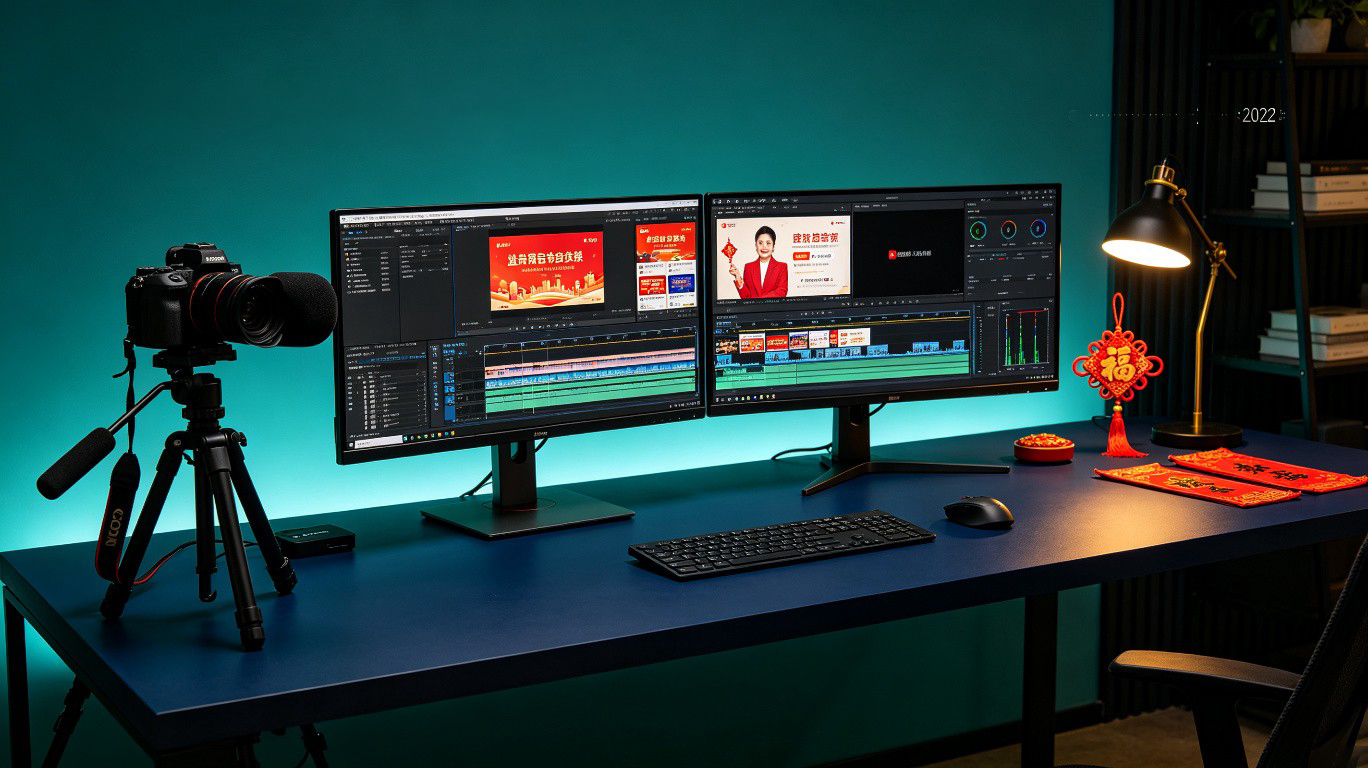
- Raw footage review and ingestion: The editing team reviews all source material — brand-produced footage, KOL-shot content, user-generated submissions, stock footage, and asset libraries. This review identifies the strongest clips, flags quality issues (exposure, focus, audio problems), and creates an initial content map that aligns with the creative brief.
- Script adaptation: If the original content was produced with an English-language script or creative brief, the script is adapted into simplified Chinese. This is not a word-for-word translation but a cultural adaptation that preserves the core message while adjusting examples, references, humor, and tone for Chinese audiences.
- Primary editing (assembly cut): The editor assembles a rough cut that establishes the narrative flow, pacing, and structure. At this stage, the focus is on story — does the video communicate its message clearly and engage the viewer from start to finish?
- Localization pass: Simplified Chinese subtitles are added and timed. On-screen text overlays are designed and positioned. If Mandarin voiceover is required, it is recorded and synced to the edit. Color grading, visual effects, and transitions are applied or adjusted for Chinese aesthetic conventions.
- Platform-specific reformatting: The edited video is reformatted for each target platform. A single production might yield four deliverables: a 30-second vertical cut for Douyin, a 60-second portrait cut for Xiaohongshu, a 3-minute horizontal cut for WeChat Video Accounts, and an 8-minute horizontal cut for Bilibili. Each version requires distinct editing decisions — different hooks, different pacing, different text overlay strategies.
- Client review and revision: The edited versions are shared with the client for review. A structured revision process allows the client to provide feedback at specific points (content accuracy, brand guideline compliance, messaging priorities) while trusting the editing team's judgment on creative and technical execution.
- Final export and delivery: Approved videos are exported in platform-specific formats with optimized encoding settings, organized by platform and campaign, and delivered with accompanying metadata (titles, descriptions, hashtags, thumbnail options) for each platform.
Why Outsource Video Editing to a China-Based Team
International brands face three fundamental challenges when producing video content for Chinese social platforms: cultural distance, timezone logistics, and turnaround speed.
Cultural distance: An editing team based in China consumes Chinese social media content daily. They know which visual trends are current, which editing styles feel fresh, and which creative choices will resonate with local audiences. This cultural fluency cannot be replicated by a team that is not immersed in the Chinese content ecosystem — no matter how detailed the creative brief.
Timezone efficiency: When your editing team operates in the same timezone as your Chinese stakeholders — whether internal China-based teams, local agency partners, or KOL collaborators — communication flows in real time. Feedback cycles that take 24 hours with a Western editing team can be completed in hours with a China-based team. For time-sensitive content (trending topic responses, festival campaigns, product launch coordination), this speed advantage is significant.
Turnaround speed: Chinese social media moves fast. Trending formats emerge and peak within days. Product launch campaigns require rapid content iteration based on initial performance data. A China-based editing team with dedicated capacity can deliver edited content 30 to 50% faster than a team that must coordinate across timezones and cultural contexts.
Cost efficiency: Professional video editing services in China are competitively priced compared to Western markets, without compromising quality. A skilled China-based editing team can deliver platform-optimized content at a cost that allows brands to produce more assets, test more creative variations, and iterate more frequently — all of which improve performance on Chinese social platforms.
Agency Selection: What to Look For
When evaluating a China-based video editing partner, international brands should assess the following criteria:
- Portfolio relevance: Review past work across the specific platforms you need (Douyin, Xiaohongshu, WeChat, Bilibili). Look for diversity in brand categories, content types, and visual styles. Pay attention to subtitle quality, on-screen text design, and overall production polish.
- Platform expertise: Ask about their understanding of each platform's algorithm, content trends, and technical specifications. A strong partner will proactively suggest platform-specific creative strategies that you have not considered.
- Localization capability: Evaluate their Chinese subtitle quality, voiceover talent network, and cultural adaptation approach. Ask for examples where they have adapted Western-source content for Chinese audiences.
- Turnaround time: Understand their standard turnaround for different project types (a single 30-second edit versus a multi-platform deliverable set) and their capacity for rush projects.
- Revision process: Clarify their revision policy — how many rounds of revision are included, how feedback is collected and managed, and how they handle requests that fall outside the original scope.
- Communication quality: Assess their English-language communication skills. A good editing partner should be able to discuss creative decisions, technical trade-offs, and strategic recommendations clearly in English, even though the content they produce is in Chinese.
Performance Optimization: Beyond the Edit
Video editing is necessary but not sufficient for success on Chinese social platforms. The metadata, thumbnail, and distribution strategy surrounding each video significantly influence its performance.
Thumbnails: Each platform has its own thumbnail specifications and best practices. Douyin thumbnails should feature a single compelling visual with minimal text. Xiaohongshu thumbnails should be aesthetically consistent with the account's visual identity. Bilibili thumbnails can be more detailed and informative. A professional editing partner should provide thumbnail options optimized for each platform.
Titles and descriptions: Video titles on Chinese platforms should be in simplified Chinese, incorporate relevant keywords (for both algorithmic and search visibility), and follow platform-specific length conventions. Descriptions should include relevant hashtags, product links, and calls to action appropriate to each platform's commerce and engagement features.
Algorithmic optimization: Understanding each platform's content recommendation algorithm helps inform editing decisions. Douyin's algorithm weighs completion rate heavily — videos that keep viewers watching to the end receive more distribution. This influences editing choices like pacing, hook structure, and cliffhanger endings. Xiaohongshu's algorithm favors content that generates saves and shares over pure view count. WeChat's algorithm considers social sharing signals. An experienced China-based editing team incorporates these algorithmic insights into their creative decisions.
Frequently Asked Questions
Can we use the same video across all Chinese social platforms?
Technically yes, but strategically no. Each Chinese platform has different aspect ratio requirements, optimal duration ranges, content conventions, and algorithmic preferences. A video that performs well on Douyin will likely underperform on Xiaohongshu or Bilibili if distributed without adaptation. The most effective approach is to produce a single master edit and create platform-specific versions from it — each with optimized pacing, text overlays, format, and metadata.
Do we need Mandarin voiceover, or are subtitles sufficient?
Subtitles are the minimum requirement — they are standard on all Chinese platforms and non-negotiable. Mandarin voiceover is recommended for brand content, especially on WeChat Video Accounts and Bilibili where audiences expect higher production value. For Douyin, subtitles alone are often sufficient given the platform's fast-scrolling consumption pattern. For Xiaohongshu, a light voiceover or well-produced audio track enhances the premium feel that the platform's users expect.
What is the typical turnaround time for video editing in China?
A single 30 to 60 second video edit typically requires 2 to 4 business days from raw footage receipt to final delivery, including one round of revisions. Multi-platform deliverable sets (one video adapted for 3 or 4 platforms) typically require 5 to 8 business days. Rush projects can be completed in 1 to 2 business days with appropriate surcharges. These timelines assume raw footage is provided and a creative brief is approved before editing begins.
How much does professional video editing for Chinese platforms cost?
Costs vary based on complexity, duration, and the number of platform-specific deliverables. As a general benchmark, a single 30 to 60 second platform-specific edit (including Chinese subtitles, on-screen text, and basic effects) ranges from $300 to $800 USD. Multi-platform packages (one video adapted for 3 to 4 platforms) range from $800 to $2,000. Projects requiring Mandarin voiceover, significant cultural adaptation, or complex motion graphics will fall at the higher end of these ranges. China-based teams typically offer 30 to 50% cost savings compared to equivalent Western market rates.
Can KOL-shot content be professionally edited to match our brand standards?
Absolutely. In fact, this is one of the most common use cases for professional editing services in China. KOLs often shoot content with their own equipment and team, and the resulting footage may not meet the brand's visual quality standards. A professional editing team can color-grade the footage to match brand guidelines, add branded text overlays and subtitles, restructure the narrative flow, and ensure the final output meets the same quality bar as brand-produced content — while preserving the authentic KOL delivery that makes the content effective.
How do we handle content that references Western regulations, pricing, or product availability that differs in China?
Professional localization addresses these differences during the editing process. Western pricing is converted to RMB. Western regulatory claims are replaced with Chinese regulatory equivalents or removed entirely. Western-specific product features that are not available in the Chinese market are edited out, and China-specific features are highlighted. This is why cultural adaptation — not just translation — is essential. A China-based editing team catches these discrepancies automatically, whereas a Western team may not recognize them.
Need Video Content for Chinese Social Platforms?
EastZebra's creative team produces platform-optimized video content for international brands targeting Chinese audiences — from Douyin short-form to Bilibili long-form, with full localization, Mandarin voiceover, and platform-specific reformatting built into every project.
Discuss Your Video Strategy